| |
|
| |
|
|
| Faq |
| home
> faq
|
|
 |
|
|
| |
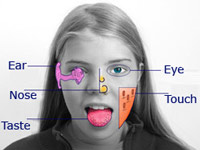
Concept of good health care
is shifting from Mortality care to Morbidity
care. ENT specialist has 3 of the 5 special
senses, namely Hearing, Smell and Taste
under its care. The 6th newly included special
Sense of Balance is also related to the
ear.
Care of hearing, taste, smell, voice and
balance care come under ENT. So morbidity
and wellness care is incomplete without
ENT care
|
|
|
|
|
|
| |
| |
|
| |
Three special senses
one destination |
|
| |
Core
competence is better achieved by single specialty
centers compared to multi-specialty center.
Shravan was conceived out of this concept
to offer top quality ENT services in friendly
/ Homely setup. Promoted by technocrats Shravan
provides wellness, preventive, diagnostic,
rehabilitative and therapeutic world class
ENT health care. Three special sense one destination.
|
|
|
|
Shravan
follows the philosophy of minimal hospitalisation,
as healing is better when the mind and body
is healthy [Which is difficult in a hospital
setting]. We achieve this by encouraging the
patient to lead a normal enjoyable active
life, outside the hospital setup, during the
healing period. |
|
|
|
|
|
|
|
When any
patient needs a surgical intervention / hospitalization
of a short duration we group them as Medical
Tourists /Tourists Patients. The patient after
surgery goes on a tour during the healing
time. |
|
|
|
|
|
In ENT practice
most of the surgeries / procedures are “Surgeries
of perfection and not Surgeries of risk”.
So we are able to keep hospitalization to
the minimum without compromising the quality
of care. Like in Ear surgery [Tympanoplasty]
normal hospitalization period is1 ½
days only. |
|
|
|
Treatment
is offered for most ENT conditions like in
any ENT Hospital |
|
|
For further
details contact us through email / telephone
with available medical details. |
|
|
Services
Offered |
|
|
|
Cosmetic
surgery Nose / Lip /Ears |
|
|
|
Microsurgery
Ear |
|
|
|
Microsurgery
Vocal cords [ Phono] |
|
|
|
FESS [Endoscopic
surgery for Sinusitis] |
|
|
|
Correction
surgery for Snoring. |
|
|
|
All Routine
ENT surgeries like, Adeno - tonsilectomy,
Septoplasty etc. |
|
|
|
|
|
|
|
| |
|
|
| |
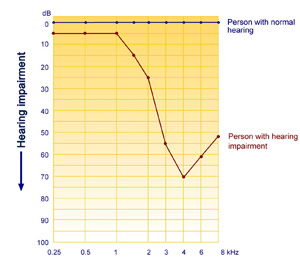
When
a person is not able to hear as
well as a normal hearing person
then they have hearing impairment.
There are several levels of hearing
impairment. |
|
|
|
|
|
Not able
to hear whispered voice |
Mild hearing
loss. |
|
|
|
Not able to hear Conversational
voice |
Moderate hearing loss. |
|
|
|
Not able to hear Loud |
Severe hearing loss. |
|
|
Not able to hear shouted
voice |
Profound hearing loss. |
|
| |
We
call profound hearing loss Deafness
or we say that person is Deaf. A deaf
person if not treated in time continues
to be Dumb. People use the term Deaf
and Dumb or Deaf mute for these individuals. |
|
|
|
|
|
|
|
|
Conductive
hearing loss-Disorder of the outer and
or middle ear. This can be treated in
majority of the case by medicine / surgery.
|
|
|
|
Sensorineural
Hearing loss [Commonly called Nerve
deafness] - Disorder of the inner ear.
Such hearing loss is irreversible once
stabilized. Hence cannot be cured. We
treat the patient by compensating the
loss by fitting a suitable hearing aid
[Like spectacles] |
|
|
|
|
Mixed
Hearing loss- When elements of both
conductive and Sensorineural hearing
loss are present. |
|
| Click
Here |
|
|
|
|
|
|
|
| |
The
list is very exhaustive. It can occur at any
age. The common ones are - |
|
|
|
Natural aging process |
|
|
Congenital / Hereditary |
|
|
Illness / complications
at birth |
|
|
Ear infections. |
|
|
Injury / Tumors |
|
|
Toxic medications |
|
|
Exposure
to sounds |
|
|
|
|
|
|
|
|
Using what
or huh or sorry frequently. |
|
|
Missing the
punch lines of jokes / loss of self confidence. |
|
|
Asking others
to repeat themselves. |
|
|
Avoids
group meetings, social or family
gatherings where listening may be
difficult. |
|
|
|
|
Turning up
the TV or radio louder than others prefer. |
|
|
Difficulty
in understanding conversation with background
noise. |
|
|
Turning one
ear towards a speaker in order to hear
better. |
|
|
Hearing some
people more clearly than others. |
|
|
Hears conversation
but has difficulty in understanding words. |
|
|
Switching
ears continually when the phone is utilised. |
|
|
Sudden dip
in performance level in the class, without
an obvious reason. |
|
|
|
Performs better when
made to sit in the front row in the classroom. |
|
|
|
Child frequently described
as restless, impatient, forgetful or socially
inappropriate. |
|
|
|
|
|
|
|
|
|
| |
Hearing
loss in a child should be suspected, if response
of your child is not appropriate. When the
child is Lazy, Inattentive or Naughty. When
there is delay in speech development. For
further detail look in common warning signs. |
|
|
|
|
|
|
|
|
|
|
Every
new born child [Early intervention program]
Every primary school child yearly check [Hearing
conservation program]
Workmen exposed to sound yearly check. [Hearing
conservation program]
Every individual on reaching 50 years.
When any of the warning signs of hearing loss
is seen.
|
|
|
|
How
to test - When you suspect a hearing loss
visit a Hearing
health care centre for a hearing test. Hearing
test is easy,
comfortable and safe. Your ability to hear
volume of different frequencies are tested
and plotted on a graph which is called
an audiogram. This helps to determine the
type and degree of
hearing loss and is used as a guide during
treatment.
Children are tested by a combination of computerized
objective hearing tests namely, Threshold
BERA, Impedance studies etc.
|
|
|
|
|
|
|
|
|
|
|
|
|
The
Cochlear implant has its limits and
risks. The apparatus does not normalize
hearing and the sound that is generated
by the implant differs from normal hearing.
Children and their families who decide
to pursue cochlear implant as an option
must meet a minimum set of criteria’s.
To name a few:
Should be bilateral profound hearing
loss.
Obtain limited or no benefit with good
binaural hearing aid trial.
No medical / surgical contraindications.
Spoken language as a primary mode of
communication.
In pre lingual children above 3 years
parents should be counseled on the limitation
of language development.
Strong motivation and family support
is a must.
Realistic expectations. Parents / family
should be told on the drawbacks of implant
too.
Assessment should be made after good
AVT sessions are given to the child
and their families.
|
|
|
|
|
|
|
|
| |
| |
|
|
Non
auditory [Indirect] effects of noise:
- Lack of sleep, sleep disturbance,
irritation, fright, decrease in work
efficiency,
Psychological distress, increase in
heart rate etc. |
|
|
|
Auditory [Direct] effects
on hearing on prolonged exposure: |
|
|
|
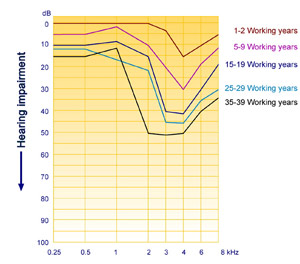
Noise
Induced Temporary Threshold Shift [TTS]:
- On exposure to
any sound stimulus fatigue sets in.
When exposed to long duration TTS sets
in. The amount of fatigue that occurs
is more or less
related to the sound intensity and duration.
Full recovery is seen
in 16 hrs if complete rest is given.
Initial Hearing loss induced by prolonged
exposure to noise can be detected by
seeing a dip at
4000 Hz in the audiogram. |
|
|
|
Noise
Induced Permanent Threshold Shift [PTS]:
- When exposure time is more than 8
hours or very of high intensity then
PTS occurs. Here there is permanent
damage and full recovery is not seen. |
|
|
|
|
|
|
Auditory
effect on hearing by single intense
sound source - For example rifle shot,
explosion, bursting of cracker, etc.
these produce variable hearing loss
depending on intensity and distance
from the noise. |
|
|
|
Sociacusis : |
| |
Community
Noise exposure - Mixie, food blenders,
washing
machine, automobiles, aeroplane, motor
cycle, air conditioners,
fan, drill etc. |
|
|
Recreational
Noise exposure - Fire works, Radio,
TV, Pop music,
loud speaker sounds |
|
|
|
|
|
|
|
[Adopted
from principles developed
by Doreen Pollack
1970]
An Auditory-Verbal
practice requires
all 10 Principles.
The term “Parents”
also includes Grandparents,
relatives, guardians
and any caregivers
who interact with
the child. |
|
Promote
early diagnosis of
hearing impairment
in newborns, infants,
toddlers, and children,
followed by immediate
audiologic management
and Auditory-Verbal
Therapy. |
|
Recommend
immediate assessment
and use of appropriate,
state-of-the-art hearing
technology to obtain
maximum benefit of
auditory stimulation. |
|
Guide
and coach parents
to help their child
use hearing as the
primary sensory modality
in developing spoken
language without
the use of sign language
or emphasis on lip-reading
[Auditory-oral therapy]. |
|
Guide
and coach parents
to become the primary
facilitator of their
child’s listening
and spoken language
development through
active consistent
participation in individualized
Auditory-Verbal therapy. |
|
Create
environment that support
listening for the
acquisition of
spoken language throughout
the child’s
daily activities. |
|
Guide
and coach parents
to help their child
integrate listening
and spoken language
into all aspects of
the child’s
life. |
|
Guide
and coach parents
to use natural developmental
patterns of audition,
speech, language,
cognition and communication. |
|
Guide
and coach parents
to help their child
self-monitor spoken
language through listening. |
|
Administer
ongoing formal and
informal diagnostic
assessments to develop
individualized Auditory-Verbal
treatment plans, to
monitor progress and
to evaluate the effectiveness
of the plans for the
child and family. |
|
Promote
education in regular
classrooms with typical
hearing peers and
with appropriate support
services from early
childhood onwards. |
|
|
|
|
|
|
|
|
|
Shravan ENT care India Pvt. Ltd.
Manuel Complex, Door No:37/849-A,
Fathima Church Road,
Elamkulam, Kochi -682020.
Kerala, India.
Tel: +91 484 2202500, 2202600, 9349305995.
Email:[email protected] |
|
|
|
|
Self
Check  |
| The
Deaf Child |
| |
|
|